How Hue works

See just how advanced — but easy to set up and use — a Hue smart home is.


The basics

Smart lights talk

Anything “smart” needs to be able to receive instructions. Hue smart lights use Zigbee or Bluetooth to communicate, depending on whether you have a Bridge.

Zigbee technology with smart lights

With Bridge

Zigbee

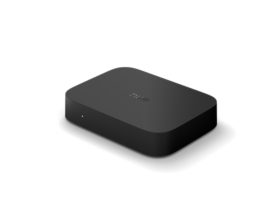
The Bridge and Bridge Pro are a smart hubs that connect to your router to establish a Zigbee network. Once you install your lights, they can communicate with the Bridge and each other.

Each light is a repeater of the signal, meaning that you can extend the network by adding lights. This is called a mesh network.

Why does the Bridge need to be plugged into my router?

Will Hue lights slow down my Wi-Fi?

Will my lights still work when my internet is down? 

Bluetooth technology with smart lights

Without Bridge

Bluetooth

If you don’t want a smart hub, you can use Bluetooth. This way, you use your mobile device to communicate directly with the lights.

As you (and your device) move, the network moves with you. This is why there’s a limit as to how far away you can be from your lights.

If I start with Bluetooth, can I add a Bridge later?

How do I know which Hue lights are Bluetooth capable?

Bluetooth vs. Bridge and Bridge Pro

Compare Hue systems

Here’s what you get with each type of system: Bluetooth vs. Bridge vs. Bridge Pro.

Bluetooth

Explore Bluetooth

Bridge

Shop Bridge

Bridge Pro

Shop Bridge Pro

Communication protocol: How our devices “talk” to each other

Bluetooth communication
Zigbee mesh network
Zigbee mesh network

Range: Connectivity distance

In-room
Full-home
Full-home

Max number of supported lights

10
50
150+

Max number of supported accessories

10
12
50+

Chip: Built for ultra-fast responses

Hue Engine: ARM M class wireless SOC
Hue Chip: MiPs 24kc based processor
Hue Chip Pro: Quad A35

GPU: Built to run complex algorithms and support AI applications

ARM Mali-G31 MP2

Control with 1 app: iOS and Android

Works with: Seamlessly integrate your lights into your smart home

Alexa, Google Home
Alexa, Google Home, Apple Home, Samsung SmartThings, Matter

Voice control: Are the lights compatible with voice control partnerships

Limited

Control from anywhere: With an internet connection

Create automations: Schedule your lights to your routines

Limited

Hue Sync: Sync lights to TV, music, games, and Hue Secure

Hue MotionAware™: Use lights as motion sensors

Zigbee Security System protection

AES 128-bit encryption
Enhanced AES-128 bit encryption using Zigbee Trust Center
Philips Hue app to control yoiur smart led lights

App control

Smart home control

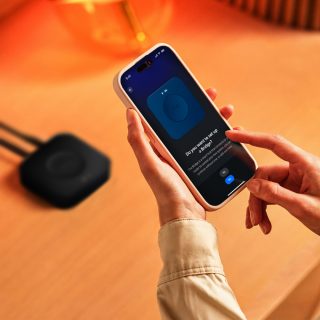
The Hue app is your command center. Guided setup gets your system ready: tap to instantly control your lights, create automations, and more.

Automations

Automations

Create recurring settings for your lights and security system.


Sync

Sync

Sync your lights to TV, games, and music.


Arm home

Security Center

Get an overview of your security system.


Customization

Accounts

Manage user permissions, third-party access, and more.


The technology

Our LED lighting

Beauty and brains. All of our bulbs, lamps, and lighting effects are researched and designed at our headquarters in the Netherlands.


Chromasync
Chromasync

Chromasync™

Professional-grade lighting for your home with precision color matching across all your smart lights. Get deep saturated colors, soft pastels, and shades of white light without any color variation across bulbs, lamps, and luminaires.


A beside lamp glowing in soft white smart light.

White

Color temperature: 2700 K

A soft white light that’s easy on the eyes. 

A bedside lamp glowing in a warm orange tone of smart light.

White ambiance

Color temperature: 2200-6500 K

All shades of white light, from warm orange to cool blue.

A bedside lamp glowing in gentle pink tone of color smart light.

White and color ambiance

Color temperature: 2200–6500 K 
+16 million colors 

All shades of white light plus full color.


A Hue gradient light tube washing a wall with a blend of blue, pink, purple, and yellow tones of smart light.
Gradient

Gradient

Color temperature: 2200–6500 K 
+16 million colors  

Considered RGBWWIC, meaning they can display multiple colors of light simultaneously. 

How is Hue different? Hue gradient lights are controlled with groups of LEDs rather than individually, so you always get an even, gradual blend of color.

A bedroom wall washed in a subtle blend of blue and pink tones of smart light.

ColorCast™

Our innovative design of precisely arranged LEDs projects color like no other light.

A Hue smart bulb glowing in warm white tunable light.
Wake up

Full-spectrum daylight

Bring daylight inside with full-spectrum tunable white light. Enjoy the widest range of white tones, from the warmest candle flame hues of amber to the coolest crisp whites of natural blue sky.

A Hue Twilight bedside lamp glowing with ultra-low dimmed warm white smart light.
deep dimming

Ultra-low dimming

Get the gentlest nightlight with ultra-low dimming. Dim your lights down to just 0.2% of their total brightness.

Explore Hue

A person is going to use a hue dimmer switch

What is smart lighting?

Go back to the basics with this handy guide to smart light technology.

A woman is holding a big filament bulb

Get started

See what lights and accessories you need, based on what you want to do.

A home office room with 2 signe gradient lamps

Features

Here are all the things you can do with Hue.