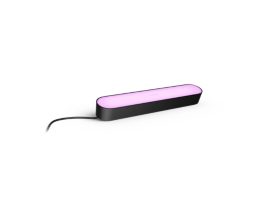
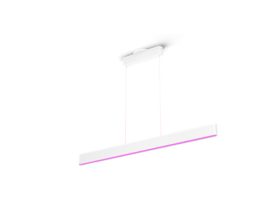
Working from home changes how your space needs to perform. Your home office is no longer just a desk and a chair — it’s where you concentrate, create, meet, and switch between tasks throughout the day. Home office lighting plays a crucial role in how well you do all of that.
The right lighting setup helps you stay focused longer, reduces eye strain, supports video calls, and makes your workspace feel intentional rather than improvised. In this guide, you’ll find practical advice on using smart lighting for a home office, from desk lighting ideas to full-room setups — plus how smart lighting from Philips Hue can adapt with you as your workday changes.
Why home office lighting matters more than you think
Lighting affects more than visibility. It shapes how alert you feel, how long you can focus, and how comfortable your eyes remain after hours of screen time.
Effective lighting for a home office should:
Reduce glare and harsh contrasts
Support long periods of screen use
Help separate work time from personal time
Improve how you appear on video calls
Brightness alone isn’t the goal. Balance is.
Start with your space and natural light
Observe how daylight moves through your room
Before adding lights, look at what you already have. Notice where windows are, how light shifts during the day, and where reflections appear on your screen. Position your desk so daylight comes from the side rather than directly in front of or behind you.
If glare becomes an issue, sheer curtains or adjustable blinds can soften incoming light without blocking it completely.
Content is not visible. Please change your cookie consent settings to enable
Get the best lighting for a home office with no windows
If your home office doesn’t have any natural light, then choosing the right kind of office smart lights is very important. If you’re deprived of natural light as you work, then you’re more likely to suffer from eyestrain, lack of concentration, or even insomnia. So, if your workspace doesn’t have windows to let natural light flood in, you can recreate it with these tips.
Cast light evenly
With no natural light streaming into the office, your lighting will have to pick up the slack. One of the keys to successful windowless office lighting is to fill the space with a uniform spread of light. In addition to creating layers of light around the room with a mix of table and floor lamps, you’ll also need a ceiling fixture capable of illuminating every corner of your office space with bright, evenly diffused light.
Mimick the sun
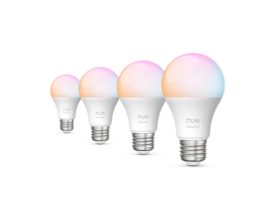
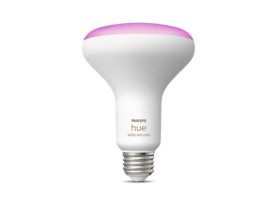
You’ll want to replicate the feeling of natural light to create the optimal environment for being productive. The feeling of natural sunlight is easily achieved by using tunable smart bulbs, which can be set to different tones of white light throughout the working day. To get going in the morning a cooler blue light will help you feel energized and stay focused on the task in hand. In the late afternoon and evening a warmer shade will help you relax as you finish your day.
Use artificial light to complement daylight
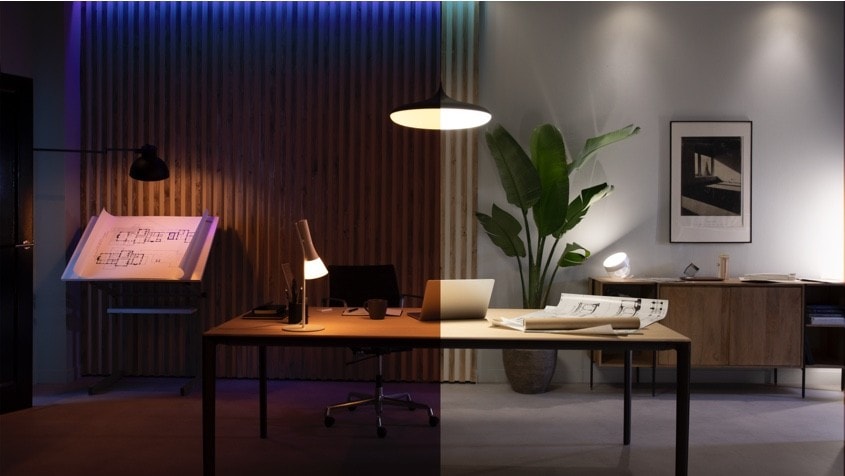
Natural light changes constantly. Smart lighting helps keep your workspace visually consistent, filling in shadows as daylight fades and reducing contrast when the sun is too strong.
You might use a lamp while working at your desk, but a ceiling light can be useful when you’re carrying out multiple tasks where you have to move from space to another. For example, if you’re filing documents, organizing your bookshelves, or even cleaning, a home office ceiling light can be very practical. Ceiling lights can also be handy when you’re making video calls — the bright, even spread of light helps you show up better on camera! The height of your ceiling is an important consideration when choosing lights. Pendant, recessed, and ceiling lights are all potential options.
Layered lighting creates a better home office
The most comfortable home office lighting setups rely on layers. Each layer serves a purpose.
Ambient lighting for overall comfort
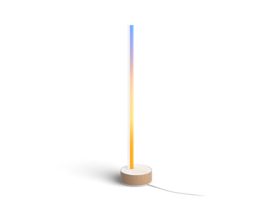
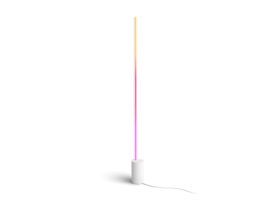
Ambient light fills the room and prevents harsh contrasts. Indirect lighting — like smart floor lamps or wall-wash light — makes your workspace feel calmer and more balanced.
Smart ambient lighting lets you fine-tune brightness without overpowering your desk area.
Task lighting for precision and focus
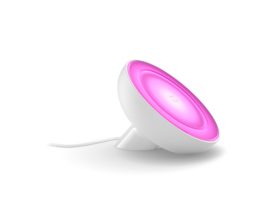
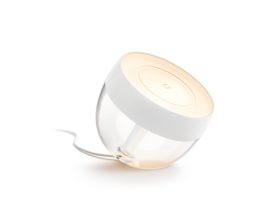
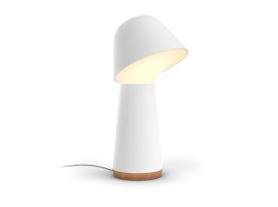
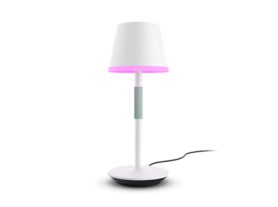
Task lighting is essential for detailed work. A desk lamp provides focused illumination exactly where you need it, without lighting the entire room.
Place your smart lamp on the opposite side of your dominant hand to avoid shadows. Adjustable brightness and color temperature are especially helpful when switching between reading, writing, and screen work.
Video calls are now a daily reality. Lighting affects how professional, clear, and approachable you appear on screen.
Light your face from the front or side
Avoid strong overhead lighting that creates shadows. A soft lamp placed slightly in front of you — or diffused ambient light — gives a natural, even look.
Use background lighting for depth
Adding subtle light behind you prevents flat, visual separation and makes your background feel intentional rather than accidental.
Workdays aren’t static. You move between deep focus, collaboration, creative thinking, and winding down.
Smart lighting allows you to:
Adjust brightness and color temperature throughout the day
Create scenes for focus, meetings, or relaxed tasks
Define work zones in shared spaces
Transition smoothly from work mode to evening mode
Lighting that adapts feels supportive rather than demanding.
Smart controls, light scenes, and daily rhythm
One of the biggest advantages of smart home office lighting is control — not just turning lights on and off, but shaping how light supports your energy and focus throughout the day.
Light scenes that match how you work
Different tasks benefit from different lighting conditions. Focused work often feels easier under brighter, cooler light, while creative or reflective tasks may benefit from softer tones.
Smart lighting scenes allow you to:
Set consistent lighting for focused work sessions
Create calmer scenes for reading, thinking, or creative tasks
Instantly adjust multiple lights together instead of one by one
Choose the smart light colors that inspire you personally
This removes friction from your workday and keeps your environment aligned with what you’re doing.
Supporting natural circadian rhythms
Light plays a role in how alert or relaxed you feel. Cooler, brighter light during the morning and early afternoon can help support concentration, while warmer, dimmer light later in the day encourages a smoother transition out of work mode.
Using lighting that shifts gradually over the course of the day helps your home office feel more in sync with natural rhythms — especially useful when working long hours indoors.
Hands-free control with voice assistants
Voice control adds convenience, especially during busy moments. Adjusting brightness, changing scenes, or turning lights off at the end of the day without leaving your desk helps maintain focus and flow.
For home offices, this kind of hands-free control feels less like a feature and more like a practical tool that keeps your workspace responsive.
A home office that works with you
Great lighting for a home office doesn’t draw attention to itself. It quietly supports your focus, protects your eyes, and helps your workspace feel purposeful.
By layering ambient, task, and accent lighting — and using smart controls to adapt as your day changes — you create an environment that works as hard as you do.
Sign up to receive personalized promotional communications about Signify related brands on their products, services, events and promotions. Learn more.
*Sign up and save 15%. You should receive your code within 1 hour after your subscription, but processing time may vary. This promotion is not valid on email addresses that are already enrolled in the Philips Hue newsletter. Read the Terms & Conditions for this promotion.