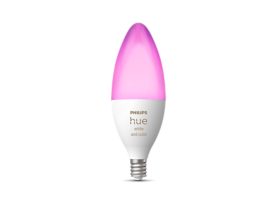
LED bulbs get hot?
LED bulbs are widely praised for being “cooler” alternatives to incandescent and halogen lights—but the idea that they produce no heat is a simplification. In reality, LEDs do generate heat, though in a very controlled, minimal way. Understanding how that heat is generated, managed, and how it impacts lifespan is key both to using LEDs safely and choosing quality smart lighting like Philips Hue.
Do LED lights give off heat?
Many users expect light bulbs to get hot (like incandescents), so the minimal-heat performance of LEDs makes an impression.
From a safety perspective, knowing if a bulb can burn you or damage your surroundings is critical.
From a longevity angle, heat is one of the main stressors that can degrade LEDs over time.
So the simple answer to how hot do LED lights get is LEDs produce some heat, but much less than traditional bulbs, and they are engineered to dissipate that heat safely.
How LED heat generation actually works
Fundamental energy conversion inefficiency
No electrical device is perfectly efficient. Even LEDs lose some energy to heat, typically through internal resistance and non-radiative processes. In high-power LEDs, up to ~70% of input energy can become heat at the junction if not managed well.
Junction and driver heat
Heat originates at the semiconductor junction (where the LED’s light-emitting action happens) and from the driver circuitry (the electronics that convert power). Some heat must always be removed to avoid damage.
Heat sink / thermal path
To manage heat, LED bulbs include heat sinks—metal or conductor paths that draw away thermal energy from the junction and distribute it to the surroundings (via conduction, convection, radiation).
Without proper thermal design, LED junction temperatures rise, leading to faster degradation, color shift, or failure.
How hot do LED lights get?
Typical household LED bulbs might have junction temperatures ranging from 30 °C to 60 °C (86–140 °F) at the heat sink, depending on design and use.
The outer surfaces (glass or plastic diffuser) are often cool or only slightly warm, due to the heat sink absorbing and distributing heat.
In well-designed lamps, you can touch them safely even when lit for hours.
But in poorly ventilated or enclosed fixtures, poor heat dispersion can lead to higher temperatures and reduced lifespan.
So, while LEDs don’t get nearly as hot as incandescents, their LED light heat output still creates thermal loads that must be managed thoughtfully.
Why LED’s low heat is a big advantage
Safety and handling
Because LED bulbs produce comparatively little heat, they’re much safer to touch and pose minimal burn risk under normal use.
Compatibility with fixtures & surfaces
They make it feasible to use LED bulbs in enclosed fixtures, near fabrics, cabinetry, or walls without damage risks—provided the fixture allows ventilation.
Extended lifespan
Heat accelerates the aging of LED components (e.g. phosphor degradation, driver wear). Minimizing junction temperature helps preserve brightness and longevity.
Philips Hue & heat: What to know
When using Philips Hue smart bulbs, the principles above apply—and Hue designs its lights to manage heat effectively:
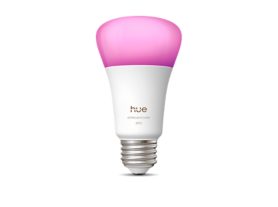
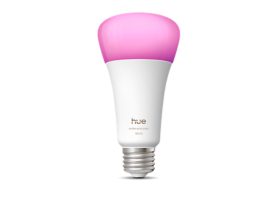
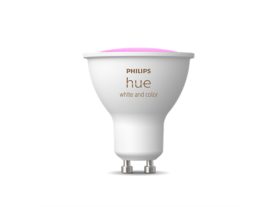
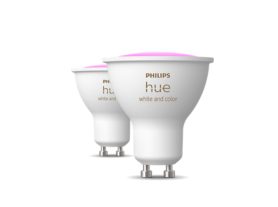
Heat sink design: Hue bulbs incorporate internal thermal paths to dissipate heat away from the LED chips and driver parts.
Smart operation doesn’t add much heat: The additional electronics (communication modules) consume very little power relative to the LED light, so their heat contribution is minimal.
Ventilation matters: Even Hue bulbs should not be placed in fully sealed, non-rated fixtures without ventilation, because trapped heat can degrade performance.
Quality control: Because Hue is a major brand, their bulbs generally meet thermal design standards (e.g. ENERGY STAR or equivalent testing) to ensure durability under expected operating conditions.
If you’re building content or guides for users, you can reassure them that Hue bulbs are engineered to handle the small heat they produce, and in normal use, they remain cool and safe.
Tips to Minimize LED Light Heat Output and Maximize Lifespan
Use bulbs in fixtures with ventilation or airflow.
Avoid enclosed fixtures unless the bulb is rated for that use.
Use dimming or schedules to reduce continuous full-power operation.
Avoid stacking multiple high-output bulbs in tight clusters.
Keep ambient temperature reasonable (very hot rooms stress LEDs more).
Choose quality bulbs (like Hue) with reliable heat sink design.
Summary
Yes, LED bulbs do produce heat—but the amount is small and largely contained through smart design. Their heat is nowhere near the burning temperatures of incandescent bulbs. The efficiency of LEDs, combined with heat sinks and proper thermal design, ensures the surfaces stay cool or only slightly warm, making them safe and reliable in everyday use. For Philips Hue users, the additional smart modules contribute negligible heat, and the products are built to manage thermal loads. With appropriate ventilation and quality design, heat should never be a concern for your smart lighting ecosystem.