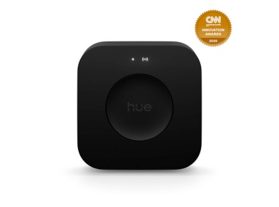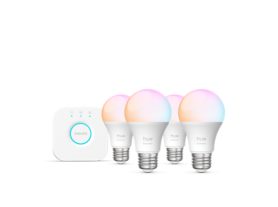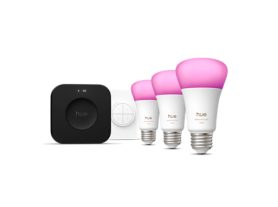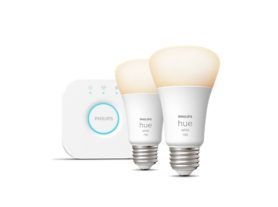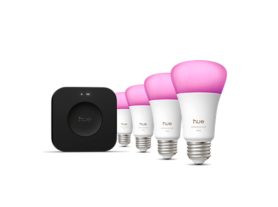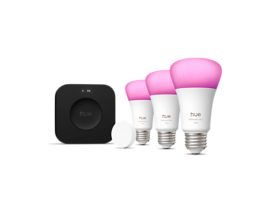
New Hue Bridge Pro and Philips Hue Bridge smart home lighting control systems.

Hue Bridge buying guide: choosing the right setup

13 February 2026

Smart lighting often begins with a simple question: do I need a Hue Bridge, or is Bluetooth enough? If you’re exploring Philips Hue for the first time—or planning to expand beyond a single room—this Hue Bridge buying guide helps you understand what the Bridge does, what it unlocks, and how it compares to other ways of controlling your lights.

Rather than focusing only on technical details, this guide looks at real-life scenarios: everyday routines, growing households, and long-term flexibility. The goal is to help you choose confidently whether you’re starting small or building a connected home that evolves over time
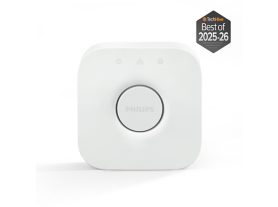
What is a Hue Bridge and what does it do?

The Hue Bridge is the central hub of a Philips Hue smart lighting system. It connects your lights and accessories using Zigbee—a dedicated, low-power network designed specifically for smart devices—rather than relying solely on Wi-Fi or Bluetooth.

This approach keeps your lighting system fast and reliable, even when your home Wi-Fi is busy. With a Bridge, lights don’t act as individual devices; they work together as one coordinated system.

A Hue Bridge enables:

Explore the Hue lighting starter kits.


Hue Bridge Vs Bluetooth: What’s right for me?

This is one of the most searched questions around Hue smart lighting—and the answer depends on how you plan to use your lights.

When Bluetooth works well

Bluetooth control is ideal if you:

  • Have just a few lights in one room
  • Want quick, phone-based control
  • Don’t need schedules or automations
  • Don’t plan to add accessories

Bluetooth is a simple way to get started and explore smart lighting basics.

When a Hue Bridge becomes essential

A Hue Bridge is the better choice if you want:

  • Control when you’re away from home
  • Multiple rooms or outdoor lighting
  • Schedules, routines, and automations
  • Motion sensors, switches, or smart buttons
  • A system that grows over time
  • Using the in-app light scenes

In short: Bluetooth is great for experimenting, while a Hue Bridge unlocks the full smart lighting experience.

Hue Bridge vs Bluetooth: key differences at a glance?

Bluetooth

Explore Bluetooth

Bridge

Shop Bridge

Bridge Pro

Shop Bridge Pro

Communication protocol: How our devices “talk” to each other

Bluetooth communication
Zigbee mesh network
Zigbee mesh network

Range: Connectivity distance

In-room
Full-home
Full-home

Max number of supported lights

10
50
150+

Max number of supported accessories

10
12
50+

Chip: Built for ultra-fast responses

Hue Engine: ARM M class wireless SOC
Hue Chip: MiPs 24kc based processor
Hue Chip Pro: Quad A35

GPU: Built to run complex algorithms and support AI applications

ARM Mali-G31 MP2

Control with 1 app: iOS and Android

Works with: Seamlessly integrate your lights into your smart home

Alexa, Google Home
Alexa, Google Home, Apple Home, Samsung SmartThings, Matter

Voice control: Are the lights compatible with voice control partnerships

Limited

Control from anywhere: With an internet connection

Create automations: Schedule your lights to your routines

Limited

Hue Sync: Sync lights to TV, music, games, and Hue Secure

Hue MotionAware™: Use lights as motion sensors

Zigbee Security System protection

AES 128-bit encryption
Enhanced AES-128 bit encryption using Zigbee Trust Center

Hue Bridge vs Hue Bridge Pro: What’s the real difference?

As Philips Hue systems grow more powerful, so does the technology behind them. The next-generation Hue Bridge Pro represents the latest evolution of the Hue Bridge—designed for users with larger homes, more devices, and more advanced smart lighting needs.

Rather than changing how you control your lights day to day, the Bridge Pro focuses on capacity, performance, and long-term flexibility. It’s built to support more complex systems while keeping the experience just as smooth and reliable.

What makes the Hue Bridge Pro different?

The Hue Bridge Pro builds on the core strengths of the original Bridge while expanding what’s possible behind the scenes. Improvements focus on how many devices the system can handle, how reliably they communicate, and how well everything works together as your setup grows.

Key capabilities of the next-generation Hue Bridge Pro include:

  • Dedicated high-performance chip 
    Equipped with a more powerful processor capable of running complex algorithms and AI-based functions, making the hub faster and more responsive than previous Bridge generations.
  • Built-in AI integration 
    Supports intelligence-driven features directly on the hub, enabling advanced automation, contextual behavior, and system-level decision making without relying solely on cloud processing.
  • MotionAware™ technology 
    Converts your Hue lighting system into a motion-aware network, allowing smart light bulbs themselves to participate in motion detection and presence awareness, beyond traditional motion sensors.
  • Lighting and security working together 
    Enables the use of Hue lights and security features simultaneously, supporting scenarios where lighting reacts automatically to detected movement for awareness or safety purposes.
  • Faster system performance and scalability 
    Designed to handle larger, more complex Hue setups with improved speed, stability, and responsiveness across lights, accessories, and automations.

Rather than introducing new features you need to learn, the next-generation Bridge Pro works quietly in the background—making everything feel more reliable as your system becomes more sophisticated.

Who is the Hue Bridge Pro best suited for?

The latest Hue Bridge generation is particularly well suited for:

  • Large homes or multi-story houses
  • Extensive indoor and outdoor lighting setups
  • Users with many accessories like motion sensors and wall switches
  • Smart homes where lighting plays a central, automated role

For most apartments and average-sized homes, a standard Hue Bridge already offers everything needed. The Hue Bridge Pro becomes relevant when scale and complexity are part of the plan.

Features of the standard Hue Bridge

When comparing a standard Hue Bridge with the next-generation Hue Bridge Pro, the decision isn’t about basic vs premium—it’s about how far you expect your system to grow.

If you’re planning a gradual, room-by-room setup, the standard Bridge is more than capable. If you already know your home will rely heavily on smart lighting across many spaces, starting with the next-generation Bridge Pro can help ensure a smoother experience long term.

Bridge

Shop Bridge

Bridge Pro

Shop Bridge Pro

Size of smart light setup

Medium setup
Large setup

Maximum number of lights per Bridge

50
150+

Maximum number of controls per Bridge

12
50+

Storage capacity and speed for light scenes

Large capacity, fast response
Very large capacity - 3x more capacity Ultra-fast - 5x faster than Bridge

MotionAware™ Use lights as motion sensors

Create automations

Internet connection

Connected via ethernet cable to router
Connected via ethernet cable or Wi-Fi to router

Placement

Near router
Anywhere in your home

Zigbee security System protection

AES-128 bit encryption per device
Enhanced AES-128 bit full system encryption using Zigbee Trust Center

How a Hue Bridge transforms everyday routines

The real value of a Hue Bridge and Hue Bridge Pro shows up in daily life—not in specs.

Lights that gently brighten in the morning, turn off automatically when you leave, or welcome you home at night quickly become part of your routine. Motion-activated hallway lighting, sunset-based schedules, and personalized scenes all rely on Bridge-enabled automation.

Over time, these small moments add up, making lighting feel responsive rather than manual.

Is a Hue Bridge right for you?

If you’re testing smart lighting with one or two bulbs, Bluetooth may be enough for now. But if you’re thinking long-term—multiple rooms, accessories, or automated routines—a Hue Bridge, or the Hue Bridge Pro is what turns individual lights into a connected system.

This Hue Bridge buying guide is designed to help you choose not just for today, but for how your home may evolve. Philips Hue systems are built to grow gradually, letting you add features when they genuinely improve your everyday life.