How do smart bulbs work?
If you’ve ever wondered how do smart bulbs work, it’s simple: A smart bulb isn’t just a light source—it’s a piece of technology designed to make lighting more intuitive, energy-efficient, and personalized. Unlike traditional bulbs, smart bulbs like Philips Hue contain small integrated circuits that let you control them wirelessly through your phone, voice assistant, or smart home hub.
How smart bulbs connect and operate
Smart bulbs communicate with your home network to receive commands and automate actions. Here’s how the process works:
1. Network connection
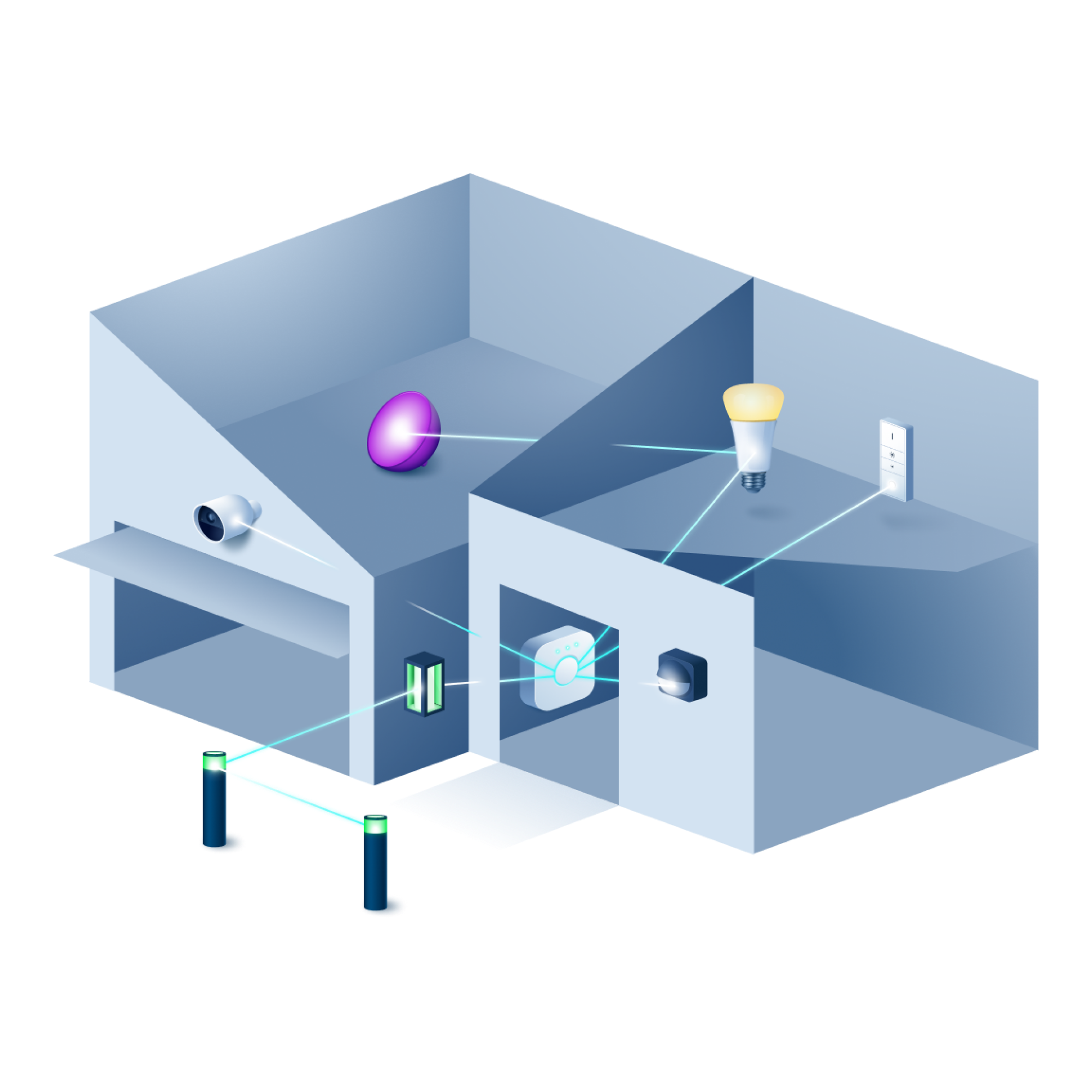
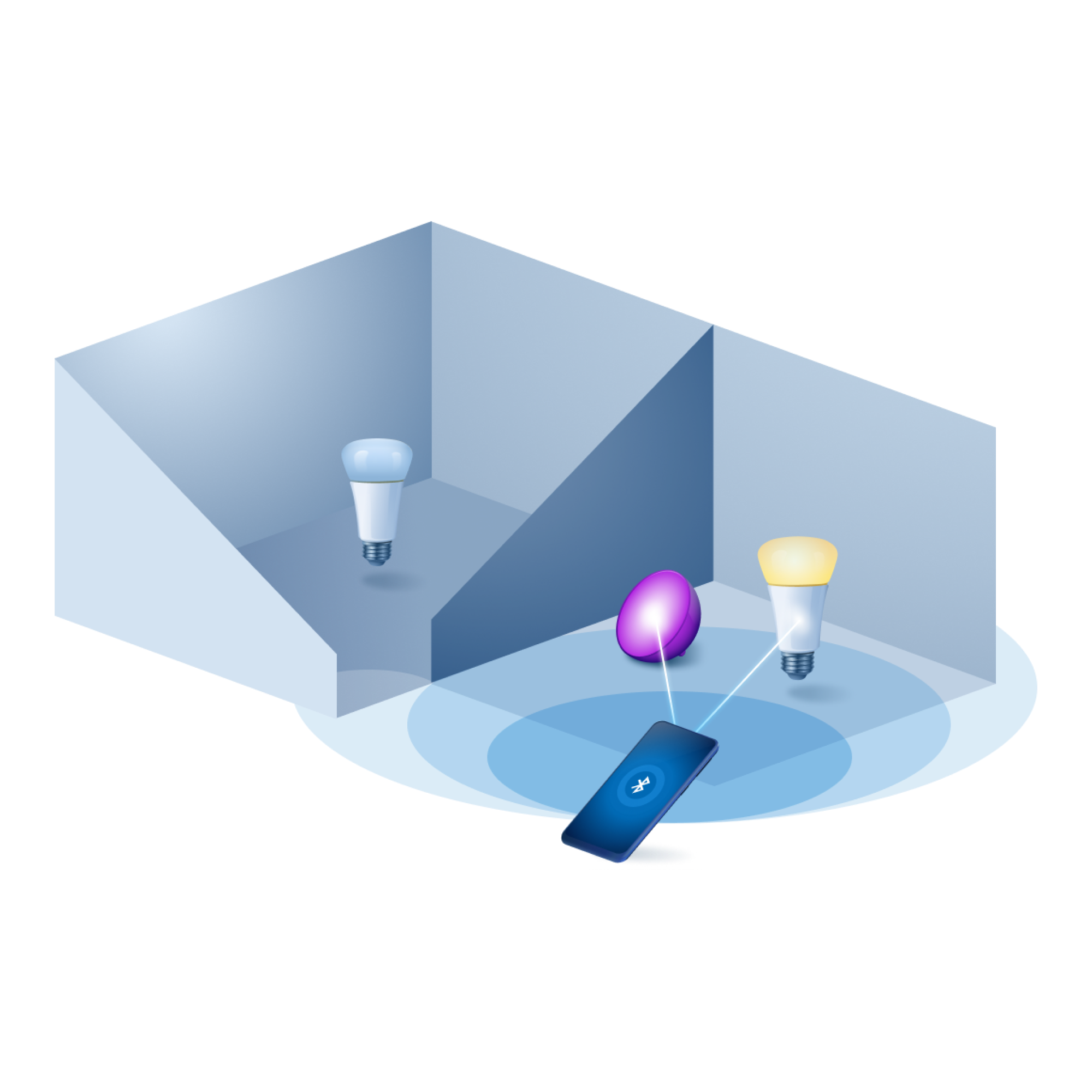
Most smart bulbs use WiFi or Bluetooth to connect directly to your mobile device or to a central hub like the Philips Hue Bridge.
Bluetooth
| Bridge Shop Bridge | Bridge Pro Shop Bridge Pro | |
| Communication protocol: How our devices “talk” to each other | Bluetooth communication | Zigbee mesh network | Zigbee mesh network |
| Range: Connectivity distance | In-room | Full-home | Full-home |
| Max number of supported lights | 10 | 50 | 150 |
| Max number of supported accessories | 10 | 12 | 50+ |
| Control with 1 app: iOS and Android | (&check) | <&check> | |
| Works with: Seamlessly integrate your lights into your smart home | Alexa, Google Home | Alexa, Google Home, Apple Home, Samsung SmartThings, Matter | Alexa, Google Home, Apple Home, Samsung SmartThings, Matter |
| Voice control: Are the lights compatible with voice control partnerships |
Limited |  | |
| Control from anywhere: With an internet connection | - | ||
| Create automations: Schedule your lights to your routines |
Limited | ||
| Hue Sync: Sync lights to TV, music, games, and Hue Secure | - | ||
| Hue MotionAware™: Use lights as motion sensors | - | - | |
| Zigbee Security System protection | AES 128-bit encryption | AES 128-bit encryption | Enhanced AES-128 bit encryption using Zigbee Trust Center |
2. Remote Control and Automation
Once connected, built-in microchips inside each bulb enable two-way communication. Using the Hue app, you can:
Turn lights on or off remotely.
Adjust brightness, color temperature, or hues.
Create lighting schedules that match your routine.
Automate lights based on motion, location, or time of day.
3. Integration with voice assistants
Philips Hue integrates seamlessly with Amazon Alexa, Google Assistant, and Apple HomeKit.
You can simply say:
“Alexa, turn the living room lights blue.”
or
“Hey Google, dim the bedroom lights to 30%.”
This allows for effortless, hands-free control across your home.
How Philips Hue smart lighting works specifically
Philips Hue stands out because it combines Bluetooth simplicity and Zigbee reliability via the Hue Bridge. Here’s what makes the ecosystem special:
The Hue Bridge
The Hue Bridge acts as the brain of your smart lighting system. It connects to your router and communicates with all Hue bulbs through Zigbee. This setup ensures:
Faster response times
Stable connections even if WiFi drops
Integration with more than 50 lights simultaneously
The Hue App
Through the Philips Hue app, users can:
Control individual bulbs or rooms
Set “scenes” for reading, relaxing, or energizing
Sync lights with music, movies, or gaming for immersive experiences
Automation and routines
You can program lights to:
Turn on when you arrive home
Gradually brighten in the morning
Turn off automatically at bedtime
React to music or on-screen content
This is made possible through the app’s routines and third-party integrations with platforms like IFTTT and Spotify.
The technology behind smart lighting
Smart bulbs use LED technology combined with microcontrollers and wireless transceivers.
LEDs provide energy efficiency and long lifespan (up to 25,000 hours).
Microchips interpret signals from apps or hubs.
Wireless modules (WiFi, Bluetooth, or Zigbee) ensure communication between devices.
Together, these components create a system that’s interactive, sustainable, and customizable.
Why choose Philips Hue smart bulbs?
Philips Hue remains a leader in the smart lighting space because it combines:
Quality illumination — bright, accurate colors.
Cross-platform compatibility — works with Alexa, Google, and Apple HomeKit.
Regular firmware updates — ensuring long-term performance.
Sustainability — LED efficiency reduces power consumption and waste.
With Philips Hue, you’re not just turning on a light—you’re crafting your home atmosphere.
Discover our smart lighting accessories