A large green leaf graphic symbolising LED energy efficiency on a dark gradient background, with no visible text or additional objects.

Energy saving tips for your home: Effortless efficiency through smart lighting


12 March 2026

Creating an energy-efficient home is no longer about remembering to flip a switch. It’s about "passive efficiency"—a home that thinks for you. By combining high-performance hardware with intelligent automation, you can significantly reduce your energy bills whilst enhancing your home’s ambience. The key is to move beyond basic LEDs to a fully integrated home automation ecosystem.

The core foundation: LED lighting advantages

The journey to an efficient home starts with the bulb. If you haven't yet made the switch, understanding LED lighting advantages is the first step towards significant savings. Unlike traditional incandescent bulbs that release 90% of their energy as heat, LEDs are designed to convert electricity directly into light.

  • Longevity: A single LED bulb can last from 25,000 to 50,000 hours—meaning you could go a decade without a replacement.

  • Lower thermal load: Because LEDs run cool, they don't contribute to "heat gain" in your rooms, which indirectly lowers your air conditioning costs during the summer.

  • Superior dimming: Smart LEDs are designed for precision. When you dim an LED, you aren't just changing the mood; you are actively reducing the wattage consumed. 

10 smart energy-saving tips for home lighting

1. Dim by default for instant savings

One of the most powerful energy-saving tips for the home is also the simplest. Dimming a smart bulb to 70% of its maximum brightness reduces its energy consumption by 51%. In the Philips Hue app, you can set your "Bright" scenes to 70% or 80%, to save significantly without a noticeable loss in light quality.

Bar chart comparing light brightness levels to power consumption, showing reduced energy use as brightness decreases from 100% to 50%.

2. Automate with smart motion sensors

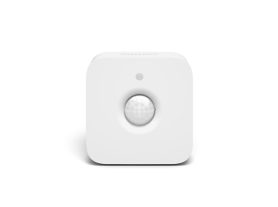
We’ve all left a light on in an empty room. Motion sensors remove human error by automatically turning lights off when they detect no movement. This ensures that high-traffic areas like hallways, bathrooms and garages are only lit when necessary.

3. Make use of "Natural Light" scenes

Harnessing natural light is vital for efficiency. Use the "Natural Light" scene in the Hue app to mimic the sun's progression. This reduces the need for high-intensity artificial light during the day, supporting both your energy goals and your circadian rhythm.

Chart showing most popular scenes and how energy efficient they are, with Nightlight being the most efficient while Concentrate is the least efficient.

4. Use smart daylight saving tips

When the clocks change, your home should adapt instantly. Instead of manual timers, use the Philips Hue app to apply daylight saving tips automatically. You can set your outdoor lights to trigger based on the actual sunset and sunrise in your specific location, ensuring they aren't using energy when the sun is up.

Chart showing energy-efficient lighting colours, with Blue the most efficient and Yellow the least.

5. Optimise motion detection settings

To maximise efficiency, you can optimise motion detection sensitivity. By tailoring how quickly your lights turn off after you leave a room, you ensure you aren't wasting even a few minutes of unnecessary illumination.

6. Switch to energy-efficient colour scenes

Did you know that colourful light is more energy-efficient than white light? Setting your bulbs to a colour can reduce energy consumption by up to 79%. Use preset scenes like "Tokyo" or "Arctic Aurora", which are designed to be high-impact but low-wattage.

Chart showing most energy-efficient scenes: Beginnings, Tokyo, Motown, Blood Moon and Galaxy
Chart showing most popular scenes and their energy efficiency, including Savannah Sunset, Tropical Twilight, Arctic Aurora, Spring Blossom, and Soho.

7. Centralise control with the Hue Bridge

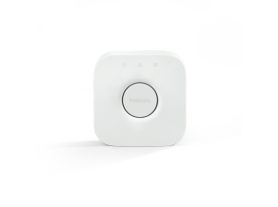
Smart hubs like the Hue Bridge are the brain of an energy-efficient home. They allow you to control up to 50 lights and accessories, ensuring that your entire home works as one cohesive, sustainable living unit rather than a collection of individual bulbs.

8. Eliminate "Vampire Power" with smart plugs

Many traditional lamps still consume standby power even when switched off. A Philips Hue Smart Plug allows you to cut the power to these devices completely via the app, eliminating vampire power instantly.

9. Set "Home & Away" geofencing

Using your phone’s GPS, Philips Hue can automatically turn off all lights the moment you leave your driveway and switch them on as you arrive. This "geofencing" technology is one of the ultimate home energy-efficient lighting solutions, ensuring you never waste a watt while you're at work or on holiday.

10. Use "Go to sleep" routines

Avoid the mistake of leaving lights on all night. Set a "Go to Sleep" routine that gradually turns your lights off at a set time. This ensures your home stays efficient even if you fall asleep before turning off the lights.

Recommended products for an energy-efficient home

Black Friday 2=30%
Hue Motion sensor
Black Friday 2=30%
Bridge Pro

Bridge Pro

£129.99

Black Friday 2=30%
Bridge

Bridge

£69.99

Black Friday 2=30%
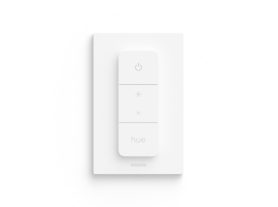
Dimmer Switch (latest model)
Sale
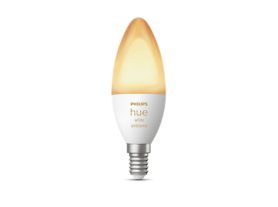
Candle - E14 smart bulb

Candle - E14 smart bulb

£29.99

£17.99

Temporarily out of stock

Explore the Hue LED bulbs and the smart lighting accessories collections