Not sure which Philips Hue wall switch module you need to control your mains-powered lights?
Find the best option for your setup, whether you want to control traditional lights as part of your Hue ecosystem, or control Hue smart lights with your existing wall switch.

Find the right wall switch module to control your lights

Smart control for traditional lights
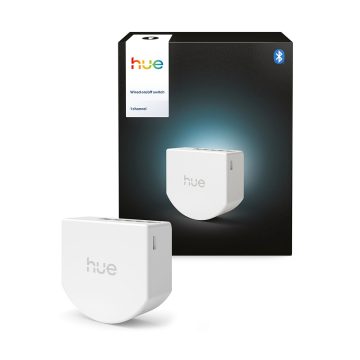
My wall switch controls one traditional light or group of lights
Wired on/off single switch
The wired on/off switch lets you control most traditional lights alongside your existing Hue lights in one seamless system.
The compact module installs behind your existing wall switch and is mains powered, so there’s no battery to replace.
A neutral wire is required.
Best for
- A single wall switch controlling one light or group of lights
- Keeping an existing decorative light fitting
- Adding traditional lighting to an existing Hue setup
What you’ll need
- A compatible traditional light or fixture
- A single (1-channel) wall switch
- A neutral wire
- A Hue Bridge (recommended)
Wired on/off single switch (1-channel) FAQs
What does the wired on/off switch do?
What does the wired on/off switch do?
Do I need to replace my existing light?
Do I need to replace my existing light?
Do I need a neutral wire?
Do I need a neutral wire?
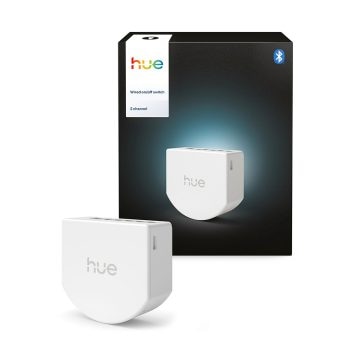
My wall switch controls two traditional lights or groups of lights
Wired on/off dual switch
The wired on/off switch lets you control most traditional lights alongside your existing Hue lights in one seamless system. The compact module installs behind your existing wall switch and is mains powered, so there’s no battery to replace.
A neutral wire is required.
Best for
- Dual wall switches controlling two separate lights or two separate groups of lights
- Adding traditional lighting to an existing Hue setup
- Rooms with more than one lighting circuit
What you’ll need
- Compatible traditional lights or fixtures
- A dual wall switch controlling two groups of lights
- A neutral wire
- A Hue Bridge (recommended)
Wired on/off dual switch (2-channels) FAQs
When should I choose the Wired on/off dual (2-channel) switch?
When should I choose the Wired on/off dual (2-channel) switch?
Can I control the two channels separately?
Can I control the two channels separately?
Do I need a neutral wire?
Do I need a neutral wire?
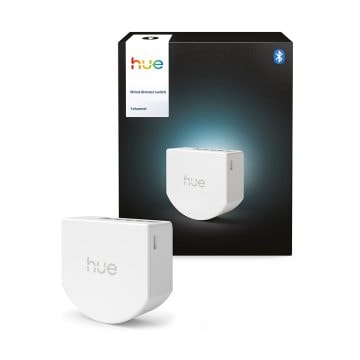
My wall switch dims one traditional light or group of lights
Wired single dimmer switch
The wired dimmer switch lets you control most traditional dimmable lights alongside your existing Hue lights in one seamless system. The compact module installs behind your traditional switch and is mains powered, so there’s no battery to replace. It works with installations both with and without a neutral wire.
Best for
- Traditional dimmable lights and dimmable fittings
- Dimming one, or one group of dimmable lights
- Installations with or without a neutral wire
What you’ll need
- A traditional light that has dimming capability
- A compatible single wall dimmer switch*
- A Hue Bridge (recommended)
Wired single dimmer switch (1 -channel) FAQs
What does the wired dimmer switch do?
What does the wired dimmer switch do?
Do I need to replace my current wall switch? *
Do I need to replace my current wall switch? *
Do I need a neutral wire?
Do I need a neutral wire?

Control Hue lights with an existing wall switch
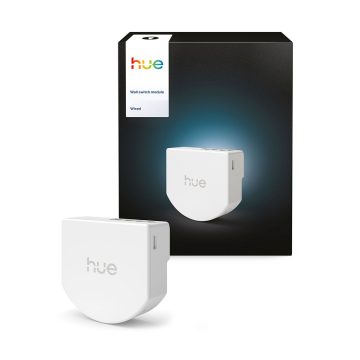
I want to control Hue smart lights with my existing wall switch
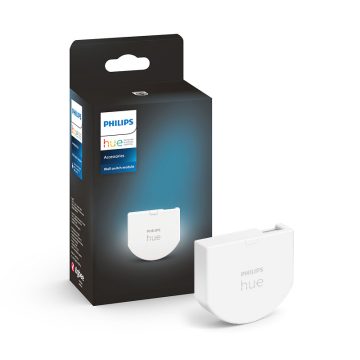
Wired wall switch module
Installed behind your existing light switch, the wired wall switch module lets you control lights in rooms and zones or trigger Hue scenes simply by flipping the switch. The wired wall switch module also keeps your Hue lights powered and reachable even when someone uses the switch. The module is mains powered, so there are no batteries to replace.
Best for
- Homes with Hue smart lights
- Households where people still use wall switches
- Preventing accidental disconnection of Hue lights
What you’ll need
- Philips Hue smart lights
- An existing compatible wall switch
- A neutral wire
- A Hue Bridge (required)
Wired wall switch module FAQs
Why would I need a wired wall switch module with Hue smart lights?
Why would I need a wired wall switch module with Hue smart lights?
What happens when I use the wall switch?
What happens when I use the wall switch?
Do I need a neutral wire?
Do I need a neutral wire?
I want to control Hue smart lights with my existing wall switch
Wall switch module (Battery)
Installed behind your existing light switch, the battery-powered wall switch module lets you control lights in rooms and zones or trigger Hue scenes simply by flipping the switch. The battery-powered wall switch module also keeps your Hue lights powered and reachable even when someone turns off the traditional switch.
Best for
- Homes with Hue smart lights
- Households where people still use wall switches
- Homes without neutral wire electrical installation
- Preventing accidental disconnection of Hue lights
What you’ll need
- Philips Hue smart lights
- An existing compatible wall switch
- A Hue Bridge (required)
Battery-powered wall switch module FAQs
Why would I need a wall switch module with Hue smart lights?
Why would I need a wall switch module with Hue smart lights?
What happens when I use the wall switch?
What happens when I use the wall switch?
Do I need a neutral wire?
Do I need a neutral wire?
Compare the switches
Still deciding? Compare Hue wall switch solutions to find the right setup for your lights and existing electrical installation.
Supported lights
Traditional lights
Traditional dimmable lights
Hue smart lights
Hue smart lights
Hue Bridge required
No, but limited functionality
No, but limited functionality
Yes
Yes
Wiring
Neutral wire required
Works with or without neutral wire
Neutral wire required
No neutral wire required
Power source
Mains
Mains
Mains
Battery (5+ years). Lifespan may vary based on usage
Switch compatibility
Rocker, toggle, push-button
Rocker, toggle, push-button
Rocker, toggle, push-button
Rocker, toggle, push-button
Channels
1- or 2 channel
1 channel
n.a.
n.a.
Dimensions
41 x 37 x 17 mm
41 x 37 x 17 mm
41 x 37 x 15 mm
43 x 38 x 10 mm
Dimming
No
Yes
Yes
Yes
Matter support
Yes (as a light)
Yes (as a light)
Yes, via Bridge only
Yes, via Bridge only
Bluetooth
Yes
Yes
No
No
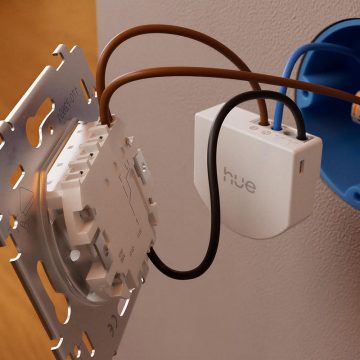
What is a neutral wire?
A neutral wire completes an electrical circuit by returning current to the power panel. In the context of smart-home installations, such as wall switches, it provides the continuous electrical connection needed to supply power to these devices. It’s usually found behind your wall switch.
In many European homes, it’s blue, but the color can vary depending on where you live and the age of your wiring. For example, it may be black in older UK installations, white or grey in the US, or black or light blue in Australia and New Zealand.
It may also be grouped with other neutral wires rather than connected directly to the switch. Always turn off the power before checking your wiring and follow the product installation instructions. If you’re unsure, ask a qualified electrician to check it for you.
Couldn’t find what you need? Here are some other options:

New



New